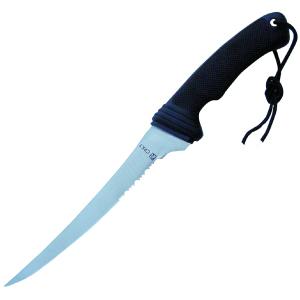
 When you catch that beautiful fish that you are excited to stick on the dinner table that night, you don't want to mess up that beautiful piece of meat when you fillet it just because your knife isn't sharp enough. Here we will talk about how to keep that fillet knife sharp so you will always have a perfect cut of meat.
Getting The Burr
The burr is a wire edge that forms across the blade opposite of what you are sharpening. Your job is not finished until you can see or feel the burr.
The Edge Bevel
Most kitchen knives have a 20-degree edge bevel. For filleting, an edge bevel of 12 to 15 degrees per side provides a clean easy cut and reasonable resistance to dulling. If you don’t cut bone, monofilament or bait with your fillet knife, a 15-degree bevel will be okay for you to use.
Set The Bevel
The easiest way to figure out what angle to set the bevel would be to stack two quarters high. Using this method is not exact, but it gets you pretty close.
To Push or To Pull
We each have those friends who swear by pulling the knife across the stone, and those who swear by pushing. Quite frankly, it doesn't matter. Both ways are just as effective. What does matter, is that the spine moves ahead of the edge. So, just make sure to angle it.
Sharpen
Draw the blade across the stone, sweeping it from heel to tip as you go. Once you have a full-length burr, sharpen to create a burr on the other side. Finish with blade-first strokes, like slicing a sliver from the stone, until the burr disappears.
Now you have the know how to keep that fillet knife just as sharp as when you purchased her. For more tips and pictures to go along, click here.
Friday, February 28, 2014
How To Keep Your Fillet Knife Sharp


Thursday, January 9, 2014
Have You Ever Been Kite Fishing?
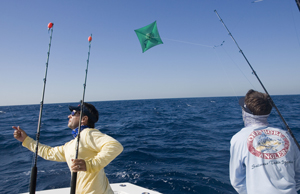 When you think of fishing, the first thing that comes to mind is you and maybe a few buddies or the kids out on the boat casting a line over the side waiting for the fish to bite. In this article we will discuss another option when it comes to catching fish, one that is a little more unique, a fishing kite.
What is a fishing kite? That is a great question. Fishing kites holds baits while slashing on the water's surface to attract the fish. It also keeps hooks and hardware above the water and out of sight of the fish below. Fishing kites keep the position of baits far apart to allow you to fish more water at once. These advantages with kite fishing will help you to catch more fish in any type of water from shallow and grassy water to clear and deep water. Now how do you use it?
Kite fishing works pretty much the same way that traditional fishing would. You bait the hooks and cast. The difference comes by allowing you fish anywhere including shallow water and weeded areas. Once you anchor your kite, the baits hang far from the boat which allows you to continue to fish with your rod and reel as well.
It doesn't matter where you fish or what you fish, but the fish will take swipes at kite baits before eating bait on a traditional rod. Grab a fishing kite and let try something new for our next fishing trip. Send us pictures of you and your fishing kite.
Thursday, October 31, 2013
How Do You Wax?
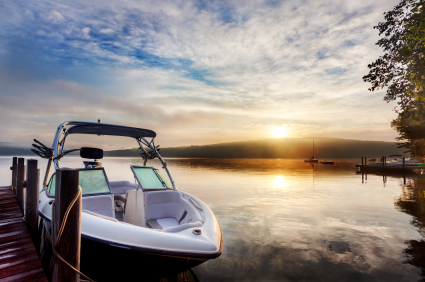 Wax on, wax off. Wax on, wax off. No, we are not in a Karate Kid movie, even though that would be pretty cool. I am talking about waxing your boat. Waxing your boat is not something that you should just forget about. It is one of the easiest ways to keep you boat looking like it just left the showroom floor. It might be a little time consuming, but the payoff is worth it.
Why Wax
When we pick up our boat off the showroom floor, it has a bright mirror like shine that we can look into and see our smiling face looking back. That’s a great feeling right? Now, how do we keep our boat looking like that? Waxing! A boat that is used, which it hopefully yours is, is exposed to the elements, water from the ocean, and other people. The Sun is one of the biggest reasons that our gel coat begins to fade. Waxing helps to restore the luster and shine of the boat surface, as well as making future cleaning easier. Waxing also helps to protect your boat from the damaging UV rays that can fade your paint job.
How To Wax
Waxing your boat is not as simple as just walking out to the dock and rubbing wax on the boat. There are a few steps to follow in order to be successful. The first one, clean your boat. Go out, rinse it off and get all the really dirty spots cleaned off. If you wax without cleaning, you will seal in all the dirt under the wax making it very difficult to get clean. After you finish giving your boat a bath, wipe off all the water spots for the same reason.
Now that she is clean, let’s get her sparkling clean. It is time to break out that wax. Specific directions vary by brand but generally, you will use a sponge or cloth to apply a layer of wax in a circular motion. You will want to let the wax sit until it “hardens.” Once it has that hazy look to it, (about 10-30 mins) you can wipe off the excess wax using a bath towel.
Once all the wax has been buffered off (What you did using the bath towel), make sure to go back and clean up any of the wax that might have gotten on any stainless steel or wood finishes on your boat. That’s it, you have just done your part to extend the life of your boat and keep her looking at her best. In order to get the full benefits of waxing, it is best to do the job 2-3 times during your boating season.
Thursday, September 5, 2013
Riding Out The Storm
 Living on the coast of Florida we know that there are certain risks. One of those risks is hurricanes. Hurricanes can bring rapidly rising waters, heavy winds, and damaging hail. We have heard how to protect ourselves and our homes, but what about our boats?
We have learned a lot though past hurricanes, sadly learned mostly from our mistakes. Here are a few things to remember when you are preparing your boat for a hurricane.
One of the most important things to do before there is even a threat of a storm is to make sure that your boat is insured. Also make sure to read over your insurance to make sure that it covers for events such as hurricanes and the debris from the winds. Also before the storm, you will want to make a storm plan, which is just where and how your boat will be secured during the storm. Most also include a designated person who is responsible if you are out of town.
The threat of a storm has just come across the news. You will need to go down to the marina and check to make sure it will be ok for your boat to remain there. Once you get the ok, go onboard and make an inventory of everything you have on the boat. It is easiest just to take a quick video. Then you will want to make sure your boat is centered in its slip and tied down tight. Next you will deflate any dinghy’s you have onboard and disconnect the battery of the boat.
It is important to remember that you do not want to stay with your boat. Head home and keep an eye on your local weather. Using these tips will help you to get through the storm and be able to get back on the water in no time once the storm is passed.
Tuesday, May 28, 2013
Summer Vacation with Thunder Marine


We leave on Friday at 10.00 am from the Bay Pines Basin, just out front of the Bay Pines public boat ramp. We will run for about 2 hours, stop for lunch and run additional 2 hours to the resort. We will travel the intercoastal for what is sure to be a scenic day - maybe we'll even see the resident dolphin that follows us through the narrows! Bring a covered dish and we will host a docktail party Friday evening so we can all get to know one another. Don't miss Redbeard's performance at 6.30 pm for the kids!
On Saturday, you can hit the private beaches, or Steve will gather a crew and hit Boca Grande pass to jump the tarpon. Whatever you do, just get back in time for the Thunder BBQ dinner/dance party!
Sunday, the crew will hit Cabbage Key for lunch, where you can tape your dollar to the ledgendary money covered walls to mark your visit.
Sleep in on Monday and then we'll cruise home.
Rates are as follows: One bedroom villa 697.00 plus tax. Two bedroom villa 978.00 plus tax. Three bedroom villa 1274.00 plus tax.
Please rsvp with Thunder and Palm Island at 1-800-824-5412 contact Lisa Halpin.
CALL STEVE AT 727 381-4444 FOR ADDITIONAL DETAILS
Hope you can join us for the fun!

Wednesday, April 24, 2013
Update That Registration!
But one of the least exiting things you need to do to be ready for boating season is make sure your boat registration is up to date. In Florida, boats are registered with the Department of Highway Safety and Motor Vehicles. For new boats, titling and registration must be filed at the same time with the county tax collector. The registration number is permanent and remains affixed to the boat as long as it is operated or stored in Florida. The number should read from left to right and must be in a color that contrasts with the hull. A decal placed next to the registration numbers shows what year the registration is valid for.

For boats owned by individuals, the registration period begins on the first day of the birth month of the owner and ends the last day of the prior month the year after. (For example, for those of us born in April, our boat registrations would be vaild from April 1, 2013, to March 31, 2014.)
In Florida, the length of a vessel is used to determine registration fees. This chart serves as a good example of the fee structure:
SAMPLE RENEWAL REGISTRATION FEES
STATE Registration base tax *$28.75
Additional Statutory Fees
STATE Florida Real Time Vehicle Information System fee $0.50
STATE Law Enforcement Radio Trust Fund fee $1.00
STATE Automated license plate validation sticker printer service fee $3.00
Subtotal of Additional Statutory Fees $4.50
Subtotal to STATE$33.25
Tax Collector registration service charge $2.25T
ax Collector branch fee $0.50
Tax Collector mailing fee $0.70
Subtotal retained by Tax Collector $3.45
GRAND TOTAL$36.70
See the chart that delineates fees by vessel footage here.
Have you updated your registration recently?

Monday, April 1, 2013
Green Boating - Everyone's Responsibility
 The phrase “green boater” might conjure up one of two images in your mind: one of a poor landlubber clutching the side of a boat, seasick, and the other of a boating rookie struggling on his maiden voyage, unable to dock his new vessel or tie a good knot.
But there is a third type of “green boater” you may not have considered before, one that is neither affected by rough waters or new to boating. This kind of green boater is the eco-friendly boater, who makes sure that he treats valuable water resources with care. Green boating does not require an entire lifestyle change and can make a positive impact on surrounding waters and wildlife, as well as reduce the chance of damage to your boat and engine. If each of the 22 million registered recreational boaters in the United States took more interest in being a green boater, pollution levels and water health might be dramatically better.
Here are a few easy ways to become a green boater:
1. Don’t throw it, stow it: Don’t throw your trash overboard. Instead, stow it somewhere on board so you can easily dispose of your trash next time you make landfall. Remember, if you wouldn’t swim in it, don’t put it in the water! Further, there are federal regulations on the type of waste that can enter the water. Make sure you are familiar with these laws as well.
2. Spill-proof your fueling practices: Prevent fuel spills by carefully and slowly filling fuel tanks and by using absorbent pads or rags to catch drips and spills. Don't top off or overflow your fuel tank. Leave five percent empty to allow fuel to expand as it warms. Remember: using detergent to disperse an oil spill or sheen is illegal!
3. Rinse and dry your boat before trailering: Aquatic hitchhikers are harmful plants and animals that ride your boat from one body of water from another. When introduced into new water, they can damage existing organisms and change the ecosystem. They can also damage your equipment, so make sure that your boat is hitchhiker-free before leaving the ramp.
Have you added these or other green boating practices into your routine? Where or when do you think boaters should especially focus on being green?

Tuesday, February 26, 2013
Safety First: Coast Guard Requirements
 When we head out for a day on the water, we never want consider the worst. And there's no point in trying to imagine every possible danger that could face you during a day on the boat. Instead, make sure you have these US Coast Guard required items on board so that you're prepared to handle anything that comes your way, if something were to happen.
Personal flotation devices (PFDs): Life jackets must be Coast Guard approved, in good condition and of suitable size for each person on the boat (we recommend keeping a variety on the boat so you're prepared for any sort of crew). PFDs must be readily accessible if not being worn (but on boats 16f ft or smaller, they must be worn). Remember, the state of Florida urges all people onboard a boat to wear a life jacket.
Visual distress signals (VDS): Recreational boats 16 ft and over used on coastal waters are required to carry a minimum of either 1) three day and three night pyrotechnic devices, 2) one day non-pyrotechnic device (flag) and one night non-pyrotechnic device (auto SOS light) or 3) a combination of 1) and 2). Recreational boats less than 16 feet on coastal waters need only carry night visual distress signals when operating from sunset to sunrise.
Fire extinguisher: Not required on all boats, but recommended. For example, if you have inboard engines or an enclosed living space, fire extinguishers are required. But as all boats have fuel and engines, it is highly recommended you keep one on board no matter your size. Make sure they are readily accessible (many boats feature recessed areas just for this purpose).
Sound producing device: You might have a built-in horn, but if not, carry a bell, whistle or other noise maker. (In fact, we carry multiple varieties just in case.)
While this is not a comprehensive list, it puts you well on your way to a safer boat. In addition, make sure you check out state and local boating regulations.
Want to take things one step further? Then do a virtual vessel safety check next time you're at the boat. These checks have a few more requirements, which will just make sure you are that much more prepared!

Monday, January 21, 2013
How to Win a Fishing Tournament

Okay, we admit: there's no exact formula to follow that will ensure you win a fishing competition. But for those of you planning on joining the 2013 Johnny Kellar Inshore Fishing Tournament, we thought we'd give you a few tournament tips that we've heard and learned over the years.
Know before you go. Do your homework before the tournament. Visit the tournament location (for the Johnny Kellar, you've got from Cedar Key to Naples, inshore of the COLREGS). Check out different fishing reports to see what's biting and under what circumstances. Cruise around to figure out where the popular spots are... and then think about if they are where you want to be. Check different spots at different times of day to discover fish patterns. Look at publications about the tournament in previous years to see if there are any similarities between years.
Equipment check. Just like you'd check your guitar before playing a rock concert, go through and check all of your rods and reels to make sure they're clean and functioning properly. Charge the batteries on your trolling motor and check the battery of your boat to ensure you don't have any electrical problems while you're out. Put fresh line on your rods and reels.
Pack like a winner. Don't forget a thing! Bring all of the lures, bait and tackle you could possibly need. Try to run through every potential scenario in your head so you can prepare for anything. Also, if the fish aren't biting like you predicted they would, you'll have extra materials to make an adjustment on the go.
Gas up. A real obvious one, we know. But make sure your boat is filled up right before the tournament! Don't let something silly like an empty tank get between you and winning.
What are tips for tournament fishing you've picked up?

Wednesday, December 26, 2012
Choosing and Caring For a PFD
Requirements
Keep in mind that all recreational vessels must have at least one Type I, II, III, or V personal flotation device (life jacket) that is U.S. Coast Guard-approved, the proper size for each person on board, in good condition and readily accessible. Additionally, vessels 16 feet in length or longer must have one Type IV (throwable) USCG-approved personal flotation device on board and immediately available. Children under 6 years of age must wear a USCG-approved Type I, II, or III PFD at all times while on any vessel less than 26 feet in length that is underway upon Florida waters.
Choosing
The Pennsylvania Fish & Boat Commission provides a great graphic that explains the different types of PFDs:

For adults, chest size will determine what size PFD is necessary. For children, this is determined by weight. Once you've selected the right size, follow these steps:
- Loosen all the straps, put PFD on and zip up.
- Starting at the waist, tighten all the straps. The PFD should feel snug but not uncomfortable.
- Have someone pull up on the shoulders. If it moves up past your nose, tighten the straps. If you can't and/or it still moves, you need a smaller size.
- If possible, test your PFD in a pool or shallow water. It should not ride up or slip over your chin while floating.
Do not alter a PFD to make it fit - choose one that works for you. There are many different styles, and many companies make separate men's and women's fits. Further, automatic inflatable vests have become increasingly popular, which allow you to wear a slimmer, more minimal vest that automatically inflates if you hit the water. Choose whatever vest you will be the most comfortable in. Many adults choose not to wear a vest because they are confident in their swimming skills, but consider that if you hit your head on your way out of the boat in an accident or emergency, you won't be conscious and able to swim.
Caring
Treat your PFD carefully, and it will have a long life. Don't use it as a cushion or boat bumper, which can decrease its buoyancy. Avoid putting heavy objects in the pockets (if applicable) or those that can poke holes in the vest. Don't leave your PFD laying in the hot sun for extended periods of time - this will cause the fabric and inner components to wear and crack more easily. If you've used it in salt water, give it a rinse with fresh water before allowing it to drip dry (not in the direct sun!). Store in a cool, dry place with good ventilation to prevent moisture from building or sitting. Put your name on the PFD if you are the only wearer so you don't accidentally put one on that doesn't fit you.
What suggestions do you have for anyone looking to purchase or care for a PFD? Any tips or tricks you've learned over the years?

Monday, November 19, 2012
Make the Most of a Boat Show

Are you planning on coming to the show? We recommend you prepare ahead of time to ensure you have the most meaningful, educational and fun experience possible!
1. Download the MyBoatShow app.
A boat show with an app, you ask? Surely one event doesn't require an entire mobile app! We think it does. The (free!) app has a new search feature that allows you to search for boats by name; a “Connect” feature that you can use to connect with Show Management; access the show's YouTube, Twitter and Facebook pages; and the option to subscribe to their e-newsletter. The app even has a map of the show! Better yet, if you're a boat show enthusiast like we are, the same app can be used for other major Florida shows (read: The Yacht and Brokerage Show in Miami Beach and others).
2. Take notes.
Seriously. Pretend you're in school again, because you won't be able to keep all of the boat and pricing information straight in your head. Write down everything you think you might need to come to a decision later in the show. If you take notes on your phone, great, but if not, make sure you bring that pen and paper!
3. Plan a strategy.
If you just plan to meander around the show, go for it. But if there are particular dealers or vendors you want to see, make sure you scope out the show ahead of time. You don't want to get to the show and not be able to find your favorite dealer! (Hint hint.) So check out maps ahead of time to make sure you hit all of your highlights.
We think those are the most important 3 things to help make your boat show experience the best possible. But if you have remaining questions, be sure to check out the show's FAQ page!
Now last, but certainly not least, make sure you visit us! Our booth is Land 513-516, and we'll have a bunch of Nautic Star boats on display. We'd love to see your face!

Tuesday, October 9, 2012
A Few Tips For the Fall Fisherman
It seems that the avid angler prefers to center their Fall fishing adventures around the mighty bass. This sought-after game fish is either elusive in its ways or as easy to catch as (pardon the pun) shooting fish in a barrel. Their popularity has a lot to do with numbers. They live in lakes, rivers, and the ocean.
Fall is actually a great time of year for bass fishing, for both the fisherman and well.... Unless you’re “catching and releasing”, I guess it’s not so great for the fish.
I’ll start with the obvious. For most, Fall is a reprieve from the Summer heat. Also, less bugs. Anyone is more likely to enjoy sitting on the water for a few hours when they’re not constantly sweating and swatting at stinging pests. Sounds like an amazing time whether you’re casting a reel or not, huh?
Onto the bass fishing...
The temperature of the water becomes cooler, which makes the fish more active. Just like humans, when we’re more active, we burn more calories. As a result, we get hungry and eat. The same goes with fish. In a somewhat frenzied state of hunger, they’ll bite just about anything!
There were a few different suggestions as to how to find the bass. Just get to know your body of water. The spots you frequent in the Spring are the same spots you should revisit in the Fall.
Naturally, you should go where their food is hanging around. Bass will eat just about anything. If they can fit it in their mouth, they will eat it. They have been known to eat anything from tiny minnows to lizards to small mammals. If motivated properly, they will even eat another bass! More than likely though, schools of small fish are a good indicator that bass may be lurking.
Natural foliage is another food group for our fine, finned friends. There is another advantage for Autumnal angling! Fallen leaves, especially under the cover or shade of the tree, will attract your target.
Bass are also known to congregate around “cover”. Cover is an object that sticks up from the bottom of a lake or river. It can be a tree stump, piling, a dock, or a log.
There are conflicting points regarding water temperature which makes my last point a good rule of thumb. Go to an area of shallow water that is near a deep area. The bass will hang around the shallow area foraging for food but will head to the deeper water when the temperature changes too rapidly. The temperature in deep water usually stays consistent while the shallow water increases and decreases quickly.
Don’t just take my word for it. Heck, I’m still learning myself! Click below for a couple of helpful and informative websites.
Now that you’re in the fishing frame of mind, why not take a look at some new fishing boats? Gift-giving season isn’t too far away! (hint hint)
Discover Boating
Take Me Fishing
Apparently, Fall isn’t your last chance of the year until Spring to chase bass. If you’re game enough to brave the tundra, give ice-fishing a try!
Bringing the family? Read Fishing Is Fun For the Whole Family for some tips.

Wednesday, August 29, 2012
Best Stadium For Boatgating

EverBank Field (Jacksonville, FL)
With its relatively warm weather year round, many football fans skip the highway and take to the waterway on game day. Stadium cheers can be heard throughout Metropolitan Park Marina on the St. Johns River, which is walking distance to EverBank Field. The marina offers nearly 80 slips that can accommodate boats up to 80 feet. The annual Gator Bowl and Florida-Georgia game held at EverBank Field offer college football fans the chance to get in on the boatgating fun.
For the Captain: Metropolitan Park Marina’s boat slips are open to the public, but on a first-come, first-served basis. Visit JaxParks.com, at least a month before game day, to reserve a slip. For daily dockage rates, contact the Jacksonville’s dockmaster at 904-630-0839.
Wednesday, August 15, 2012
How To Take A Great Picture of Your Boat


Friday, August 3, 2012
Is Satellite TV For You?
 |
| Inside A Satellite Dome |
While the serenity and excitement of fishing, water sports, lying in the sun, and feeling the cool breeze blow across your skin is all part of the boating experience; sometimes, you just want to watch a baseball game…or maybe, in recent weeks, your favorite Olympic team. Or, yes, the newest Disney show that you’re youngest can’t live without.
Welcome to the 21st Century -- we have satellite capabilities on boats here.
Should I make the investment?
Having a satellite TV on a boat clearly isn’t for everyone. If you don’t spend a lot of time on your boat, you don’t need it. If you enjoy getting away from the noise of everyday life, it’s highly probable that you wouldn’t even turn the TV on if you had one on your boat. However, if you have a family, enjoy entertaining on your boat, or just want to kick back and relax, then satellite TV could definitely be for you.
Marine satellite TV systems are available at a wide range of prices – mainly depending on how much equipment you need. For just one TV and receiver, marine satellite TV can usually fit into a smaller budget. But if you want to have multiple TVs being used at one time or a large system, it can get pricey.
How it works
If you have decided that satellite TV on your boat is for you, then you’re in luck – the set-up process is fairly simple. Satellite TV on a boat isn’t much different than that on land. While satellite on land uses wires and cables, marine satellite TV receives transmissions directly from satellites.
First, you’ll need to contact a local marine TV retailer ( that’s us ). Or, if you are buying a boat and want satellite TV as an add-on, make sure you tell your salesperson so they can make the changes accordingly. Either way, we’ll be able to make sure you get all of the proper equipment and can help you with the set up. If you’re confident in knowing what you’re doing, you can just order the equipment from our parts department. However, we highly recommend having our trained and professional technicians install your new satellite TV.
Now, you’ll need a TV. Any TV will do really – however, LCDs, Plasma’s, and flat screens are the obvious choices. Flat screens on mounts also give you the ability to easily hide the TV or move it out of the way when you’re not using it.
Next, decide which satellite service provider you’d like to go with. You can even go with providers such as DirecTV and Dish Network. All satellite service providers have different channels and network packages to offer, so be sure to check out all of their packages. Premium movies and pay-per-view programs can also be purchased while onboard.
Once set-up is complete, you’ll be able to enjoy your satellite TV, and a few great boating movies, from just about anywhere. Simple as that!
Happy boating with your 48” LCD satellite TV!
Friday, July 27, 2012
Buying Used - Where to Start

Buying from a private seller
Buying a used boat from a private seller runs a high risk even though, at times, it can seem like a better ‘deal’. Most private sellers do not allow you to test drive the boat that you are interested in purchasing. Most private sellers also don’t stand behind the boat sale or offer mechanical and other help should a problem arise once the boat is yours.
Also See: Marine Warranties
Should you find that you have completely fallen in love with a boat from a private seller, be sure you are very careful and look over the boat very thoroughly. Look for scratches, dents, cracks – open all doors and cabinets. Check the cables and steering. In fact, you should consider hiring a qualified professional boat surveyor to look over the boat and to do a complete certified inspection.
Even if the used boat from a private seller seems perfect and receives a wonderful inspection, you should try to get some background check information on the boat and the seller. Yes, there are good deals out there, and yes, there are plenty of amazing boat owners looking to legally sell their used boat – but fraud runs rampant, and stolen boats are constantly being sold throughout the country. Always make sure that you’re working with a well known, local, and highly recommended seller.
It’s best to stay away from long distance online sales. You may end up spending more money in traveling expenses, only to come back home with a broken boat or even worse, not coming home with a boat at all! Never, ever, buy a boat online without inspecting it first, or hire a certified professional to inspect it.
Buying from a dealer
Buying a used boat from a dealer can certainly take care of most of those headaches and extra costs for you that might come along with buying from a private seller. If at all possible, you should try to buy your used boat from a trusted boat dealer (like us). Boat dealers inspect every used boat that they have so that it is ready and waiting for you to inspect it yourself. Want to take it for a test drive? – Certainly! Quality boat dealers allow their clients to test drive their boats before final purchase. Just like a car, you want to know every detail of what you’re about to invest into – boat’s aren’t that different than purchasing your next new dream car.
Buying from a well-known and highly regarded boat dealer or broker can ensure that you aren’t getting yourself into a fraudulent deal. Next thing you know, instead of spending money on fishing bait for you, and a new boat grill for your other half, you’ll be spending money on finding a lawyer and trying to get yourself out of this “amazing deal” that you had to have.
Boat dealers stand behind their boats (as they should, since they inspected them), and even offer special servicing and maintenance. You can take comfort in knowing that you can take your used boat back to the same dealership that sold the boat to you for tune ups and servicing, and have it treated like the ‘baby’ you know it is – after all, they took care of it before you ever did.
While there are pros and cons to both buying from a private seller and a dealership, the bottom line is that you want to make sure you have the boat properly inspected before making the purchase and you should always ask questions about the boat no matter where you purchase it from (previous owners, any accidents, etc). Make sure you are comfortable with your dealer or seller – it will help if you buy local or from someone that you know can be trusted. And if you feel like something is too good to be true, do some background snooping and make sure you’re not about to be ‘conned’.
Now, go find that perfect boat and enjoy the second half of summer out on the water. Happy Boating!!
Friday, July 20, 2012
What to Do if You Run Out of Gas

Even the best of boaters may find themselves in this situation though, so here are a few things to do should you find yourself stranded.
- First of all, don't panic! Panicking in any emergency situation on a boat is a no-no - especially if there are others on board with you. Take a breather and clear your mind so that you can make rational decisions.
- If you have a VHF radio or phone, and it is working, you should make that your first choice for trying to call for help. You can read our blog full of information on how to use a VHF radio and what stations to call here.
- Set your anchor so that you don't float any further than you want to. This will also assure that you don't drift into rocks, shallow water, etc.
- Observe where you are. How long have you been in your boat - are you close to shore? Could you paddle there (if you're in a smaller boat)? Are there any rocks or other dangerous objects around that could damage your boat? Are there any landmarks that you can give over the radio so that other boats in the area know your location quicker and easier?
- If it's daylight, make sure you put on sunscreen and stay hydrated. There's nothing worse than getting burnt to a crisp, or worse, passing out from heat exhaustion or dehydration. Put cool rags on your neck or face to cool down if you're in an extreme heat situation.
- Put your life jacket on. You never know what else could go wrong. And you should already have it on anyway!
To help you plan for a boating trip and keep safe, always make sure a friend or family member has a copy of your float plan. Your float plan should include your course, how many people are aboard, your vessel description, and places that you may stop. You should also let them know a time that you’ll be back from your journey, and that if you aren’t back by a certain time, they should call for help. If you are delayed, make sure you contact them and make them aware. Have nautical charts of the area that you are boating in, a global positioning device and a reliable way to communicate on board. These are all things you can do in advance that could potentially save your life.
Happy Boating!!
Friday, July 6, 2012
The Effects of Current While Boating

First, let’s better understand what a current is. Most boaters already understand currents, but it’s good to refresh your memory every once and awhile. Currents are the horizontal flow of water in a downstream direction. Ocean, lake and river currents respond to the push of prevailing winds. Ocean currents are also affected by variations in water density, resulting from the different levels of salinity and temperatures. Currents that are intermittent and respond to the movement of the sun and moon are called ‘tidal currents’. Tidal currents are the actual rise and fall in the water level as they force mass amounts of water alternately against and away from shore. How’s that for a brief science lesson?
Now that you’re up to speed, let’s talk about the safety aspect of paying attention to the water’s currents. Currents are much stronger during high and low tide, which means they can easily pull a swimmer away from the boat, or even under water, with little to no warning. Always make sure you keep track of the high and low tides for this very reason. Don’t allow your passengers off of your boat and into the water unless you know for sure that you’ve been following the current and can observe when the tides are high or low.
Let’s face it, you’re eventually going to face some sort of trial when it comes to your boat, but the one thing most boater’s fear the most is running aground. Observing the current and maneuvering accordingly can help you prevent your boat from doing just that. Should you lose an engine, a strong current can cause your boat to run aground, leaving you in a desperate and possibly life threatening situation. Keeping track of the current is a definite safety precaution that all boaters need to take.
Currents aren’t always a bad thing. In fact, they can help you conserve fuel, whether you’re running low or just trying to save some extra bucks. Running with the current will help you conserve fuel. There’s nothing better than saving a little money while doing the thing you love the most!
Current can have a major impact on your boating adventure (be it good or bad), so make sure you watch tide charts or listen to the reports in your area before you head onto the water. Always be safe, especially when you’re in doubt. It’s better to be safe than sorry. And it’s especially nice if you can take advantage of nature’s currents and help yourself out in the process!
Saturday, June 30, 2012
4th of July Boating Safety Tips

BOATING SAFETY TIPS
- Before and during operation, make sure everyone on your boat is in the proper passenger position. Sit down and hold on. You don’t want your passengers to be in a position that could result in them falling overboard. Also, don't sit or stand at the front of a moving pontoon boat.
- Always wear your lifejacket. It can save your life. The majority of boating fatalities involve people who drown without a lifejacket on.
- Watch out for the propeller. Shut off the engine whenever anyone is in the water near your boat. Placing the engine in neutral is not enough.
- Use your lanyard cut-off switch. Things can happen quickly on the water. Make sure your engine will shut off if you are not in the operator’s position.
Have a happy and safe 4th of July!
Thursday, June 28, 2012
It's Time To Grill
I’m sure most of us can use common sense and know that you’re not going to lug a huge stainless steel gas grill on a boat. In fact, there are special grills that are specifically made for boaters. You’ll want to make sure you have one that is best suited for your boat and space limits. Keep in mind that grilling on land is dangerous, so grilling on a boat is even more of a hazard – not necessarily always because of the grill, but because of the limited space on a boat and the constant movement of being on the water.
First of all, plan ahead. Before you step foot on your boat, make sure you have planned out everything that you’ll need – be it food items, pots and pans, drinks, etc. Remember, you have a small space to work with, so try to only bring one of everything that you need (unless, of course, it’s eating utensils, etc). This won’t only make it easier for you to grill, it will also be easier for clean up. You should take some time to pre-plan your meals and stick with those meals that you already have the cooking items for onboard. Never count on catching fish, if that is indeed what you want to fix. Fish should always be considered a ‘bonus’ meal or something to eat in place of a non-perishable meal. Also, check your propane tank for leaks or damage before setting off. Nothing could be more frustrating than trying to start your meal without gas for your grill -- or worse, having a leak and lighting a match nearby.
It’s safer to cook when the boat is docked. You won’t lose your food or have to worry about someone falling on the grill should a random wave come along. Speaking of which, make sure all of your cooking utensils and pans are in a zippered bag/back pack or secure cabinet, whether you’re docked or not. Your boats movements are unpredictable and loose items can be a potential hazard! If you must find that adventure out in the open water, make sure you're anchor is set to help keep you from moving about.
Don’t bring glass on board! Many bowls, cups, and drink or cooking bottles (such as olive oil) are glass and should not be brought onboard. Should you find that you need a bowl or container, always use something that is plastic – put condiments such as ketchup or cooking oils in portable plastic containers. This would go along with the ‘planning ahead’ point above. When making sure you have all of the proper cooking equipment or extras, if you find that you have something glass, run to your nearest store to find a plastic alternative. It’s not worth the risk of having that glass break or having someone step on a loose glass bottle – especially if you’re hours away from land.
Conserve water as much as possible while cooking and cleaning. Remember, there are a lot of different uses for water on your boat. Bring hand sanitizer to wash your hands with periodically, and sanitizing wipes to wipe down surfaces. Don’t run the faucet while cleaning up after your meal. Reuse water where possible, and bring bottled water to drink and use when needed.
You might wonder what types of things to cook when on a boat – again, keeping in mind that you have very limited space. Some things that you might consider grilling are ka-bobs. Pre-make your ka-bobs and put them in large 1gallon plastic storage bags. Or, consider doing the same with chicken or anything that needs to be marinated – put your pieces of meat in large plastic containers or storage bags (which are more flexible) along with your marinade. By the time dinner comes, they’ll be perfectly marinated and you can toss the plastic bags out. Easy clean up! Fish is an easy meal as well. Seasoning your fish with simple salt and pepper or old bay seasoning, then putting it on the grill, makes for a delicious and memorable dinner for the entire group. Simple, but oh so delish! Tacos and single dish meals are also easy when on a boat. Put all of your toppings or condiments in separate containers before getting on your boat or leaving dock -- it makes your life much easier, especially if your toppings need to be sliced and diced. Always make sure your meat is cold and on ice – never cook meat that has been allowed to come to room temperature (who knows how long it’s been warm!) And remember that leftovers aren’t any good either unless placed on ice after your meal.
Be safe on your boat and take all precautionary measures, including an up to date fire extinguisher. Anything can go wrong in under a second on a boat, whether you’re playing with heat or not! Check at you have a small first aid kit with burn cream. This will come in handy for sunburn or an accidental burn from the grill. Always be prepared and always plan ahead – and don’t forget the food!